
23 October 2026
How Long Does Bulk Fermentation Take for Sourdough?
By Fredrik
Bulk fermentation typically takes 3–6 hours at a normal room temperature of 20–24°C. In a warm 27°C kitchen it can finish in about 2 hours; in a cold one it can need 12 or more. The reliable answer is your dough temperature plus its cues: roughly 50% rise, a jiggly texture, and a domed, smooth surface.
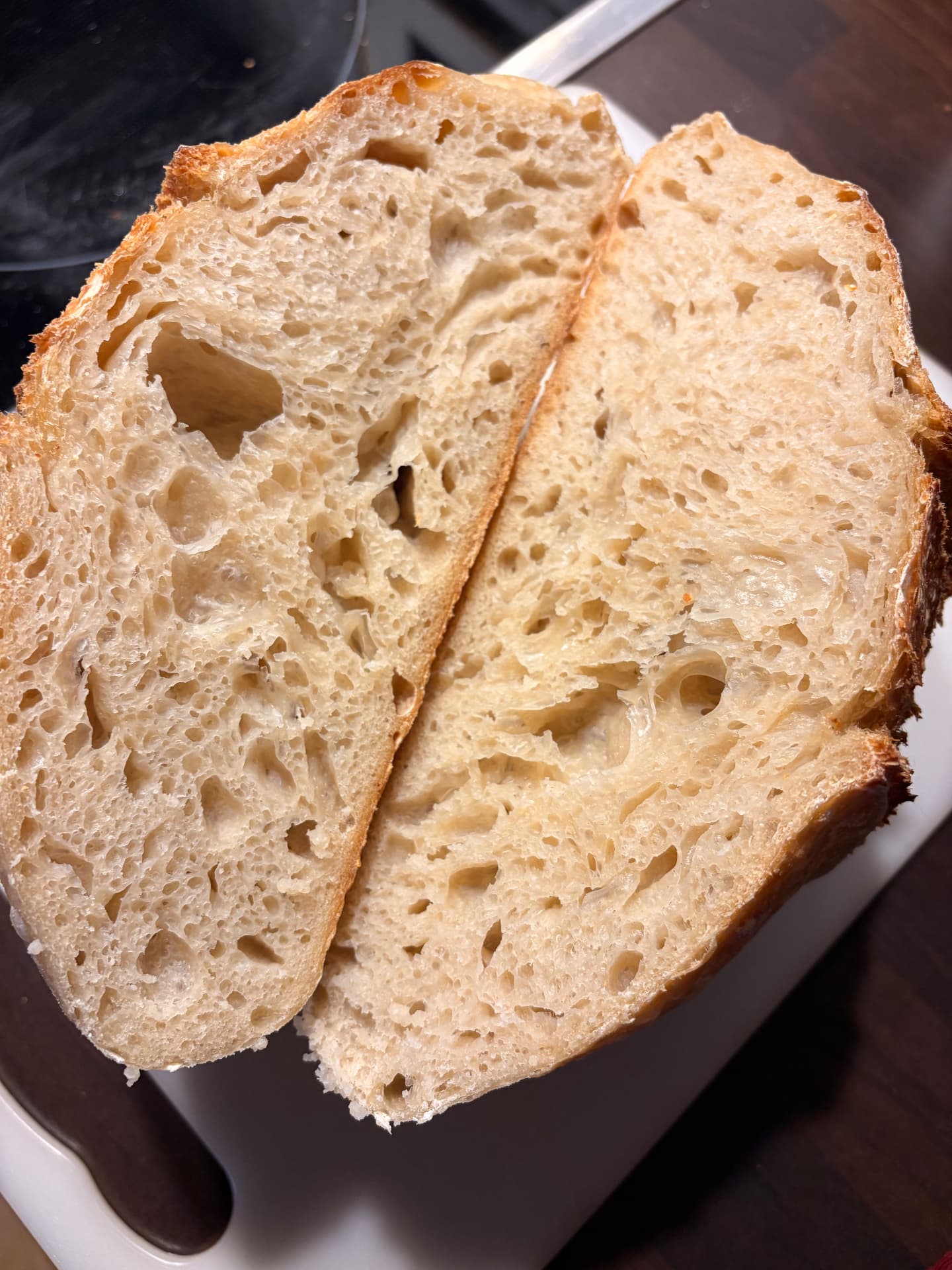
This article builds on fermentation research, including De Vuyst & Neysens (2005) and Gänzle (2014).
How far should bulk go?
- 0 % · start, mark the level
- 50–75 % · done, shape now
- 100 % · doubled: often too far
How long does bulk fermentation take for sourdough at typical room temperatures?
At a normal room temperature of 20-24°C, bulk fermentation usually takes 3-6 hours from mixing to shaping. That is the short answer, and it is already wider than most recipes admit.
The honest answer is that bulk fermentation runs on temperature, not on a clock. A dough sitting at 25°C in a July kitchen can finish in under 3 hours, while the same dough at 18°C can take 8 or more. King Arthur Baking's fermentation guidance gives typical ranges at room temperature and stresses that duration shifts with every batch.
So treat any recipe's "4 hours" as a starting guess, not an instruction. Watch the dough instead: how much it has risen, how it feels, and how warm your kitchen is today. Logging those three details each bake, as you can in DEGA, turns the guess into a number you can trust next time.
How does dough temperature change bulk fermentation duration?
Yeast activity roughly doubles for every 8°C rise in dough temperature, so the same dough that takes 5 hours at 21°C can finish in under 3 hours at 27°C. There is no single correct duration. Your dough tells you when it is done, and temperature tells you roughly when to start checking.
Temperature-to-time reference table
These ranges assume a typical recipe with around 20% starter and moderate hydration. Treat them as starting points, then confirm with rise percentage and texture.
| Dough temperature | Expected bulk duration | What to watch for |
|---|---|---|
| 24–27°C | 2–4 hours | Fast rise, check every 30 minutes after hour 2 |
| 21–24°C | 4–6 hours | Steady rise, smooth surface, jiggle when shaken |
| 18–21°C | 6–9 hours | Slower build, watch for 50–75% rise |
| 4–10°C (cold bulk) | 12–24 hours | Rise continues slowly, check before shaping |
The ranges overlap because flour, hydration, and starter strength shift the timeline. A stiff levain or cold flour straight from storage can add an hour even at the same dough temperature.
Measuring dough temperature (and why it beats room temperature)
Room temperature is a guess at what your dough is doing. A dough that starts at 25°C in a 21°C kitchen cools over hours, so its average temperature sits below your thermostat reading. Use an instant-read probe in the centre of the dough right after mixing, then again midway through bulk to see which direction it is drifting. If your kitchen runs warm in summer, a dough starting at 27°C may need shaping well before the 4-hour mark your winter notes suggest.
What visual and tactile cues tell you bulk fermentation is done?
The dough itself is a better timer than any clock. Watch for five cues: roughly 30-50% rise in volume, a domed surface rather than a flat one, small bubbles visible at the edge of the container, a jiggly wobble when you shake the bowl, and dough that pulls away cleanly from the sides. When most of these line up, bulk ferment is done.
The jiggly-domed test
Shake the container gently. Finished dough wobbles like set custard and holds a smooth dome on top. If it slumps flat or spreads, fermentation has gone too far. If it feels dense and barely moves, give it another hour and check again.
Why texture matters more than the clock
Temperature drives fermentation speed, so the same dough that finishes in 3 hours at 25°C can take 8 hours at 18°C. King Arthur Baking explains that warmer dough ferments measurably faster, which is why a fixed recipe time fails across seasons. Log the dough temperature alongside your cues each bake, and the pattern for your kitchen emerges within a few weeks.
How much should sourdough rise during bulk fermentation (percentage guidance)?
A common target is 50-75% rise for many recipes baked at typical room temperature. Warmer doughs often finish closer to 50%, while colder doughs benefit from pushing toward 75% because less fermentation happens once the loaf is shaped and retarded. The percentage is a cue, not a law: pair it with temperature and texture before deciding.
Marking your container
Use a straight-sided container and note the starting dough level. A rubber band or a piece of tape works: mark the starting height, then mark where 50% and 75% would sit (roughly 1.5x and 1.75x the original height). A clear container with volume markings makes this trivial. Measure from the dough surface, not the container bottom, if your dough sits unevenly.
Why 100% rise is often too much
By the time dough has doubled in the bulk container, it has usually consumed much of its strength. Shaping degasses it, and you risk a flat loaf with a dense crumb and weak oven spring. The dough still needs energy left for shaping, cold proof, and the bake itself. Stopping at 50-75% keeps that reserve.
How long does cold bulk fermentation take and when should you use it?
Cold bulk fermentation runs 8 to 24+ hours in the fridge, with most bakes landing somewhere between 12 and 18 hours. The dough keeps fermenting at refrigerator temperatures, just slowly, so the same rise target you would chase at room temperature applies. Aim for roughly 50% rise before the dough goes in the fridge if you want it ready to shape the next evening, or shape straight from cold and let it do its final proof overnight instead. Rise percentage, not hours, is the real measure of doneness, and that holds whether the dough is warm or cold.
Cold bulk fermentation step by step
Mix and complete your stretch and folds as usual at room temperature. Let the dough sit warm for 1 to 3 hours so fermentation is underway before chilling, then cover and refrigerate. Check the dough's rise against your starting point before shaping; if it has only gained 30%, give it a few hours on the counter after it comes out.
When cold bulk is the right call
Cold bulk buys you schedule control. You can start a dough after dinner, sleep through the long stretch, and shape after work the next day, which is hard to arrange with a 4-hour warm bulk in a 24°C Swedish summer kitchen. The trade-off is flavour: longer, cooler fermentation gives a more sour, more complex loaf, but the slow pace makes it easy to under-ferment if you skip checking the rise. Note it down per bake, because your fridge temperature and flour will shift the timing from bake to bake.
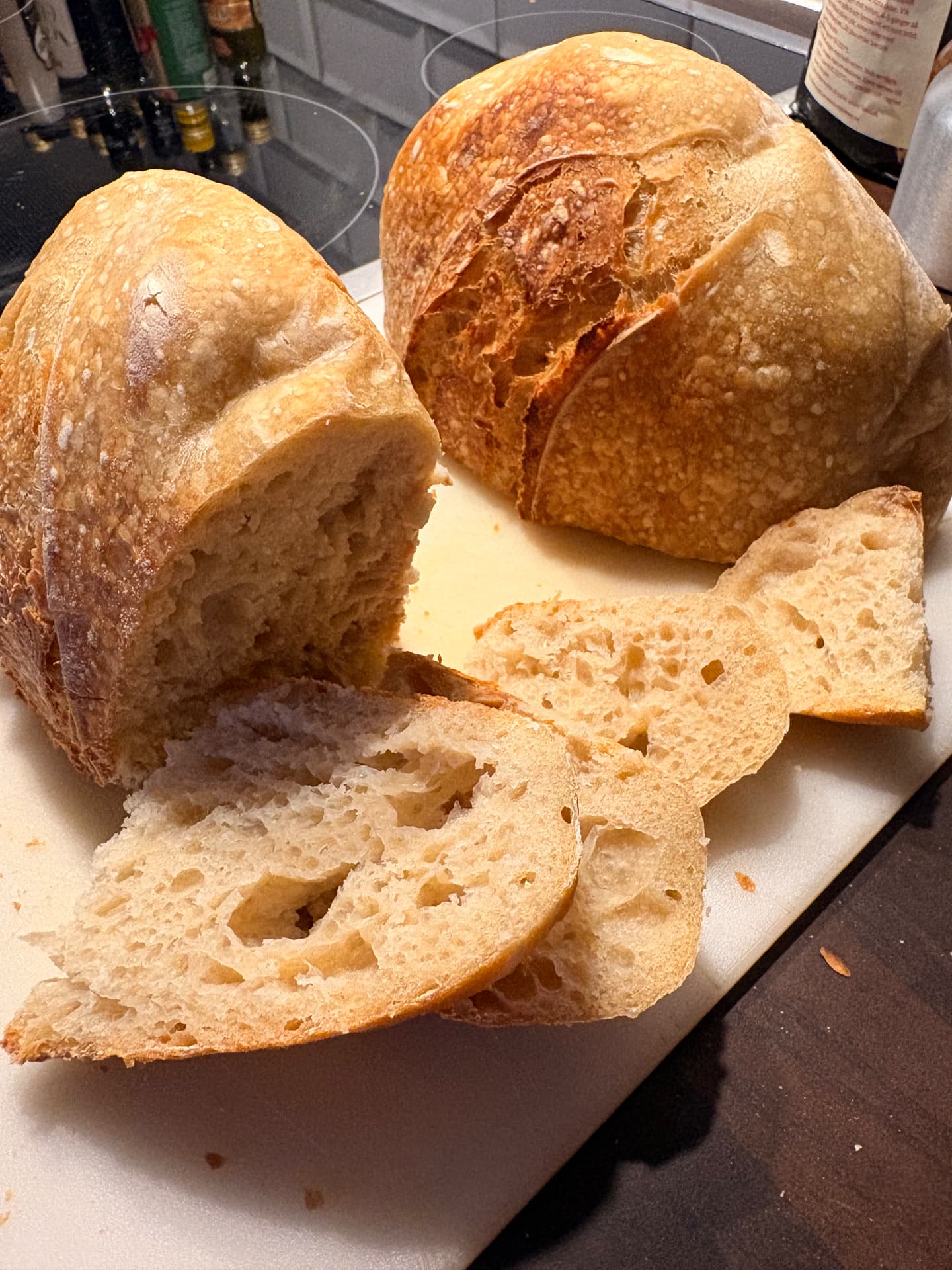
What happens if bulk fermentation runs too short or too long?
Signs of under-fermentation
Under-fermented dough hasn't built enough gas or acidity, so oven spring suffers and the crumb comes out tight and dense, often with a gummy line near the base. The loaf may also taste flat, without the mild tang you expect. If your dough barely domed in the bulk container and still feels stiff when you shape it, it likely needed more time.
Signs of over-fermentation
Over-fermented dough has passed its peak: it spreads flat in the container instead of holding a dome, smells sharply sour or boozy, and feels weak and sticky when you shape it. The gluten structure has degraded, so the loaf slumps on the counter and bakes wide rather than tall, with a crumb that collapses into large, irregular holes near the top.
Both failures are logged the same way in DEGA: note the dough temperature, rise percentage, and texture at the moment you ended bulk, so the next bake starts from evidence rather than a guess.
How do you adjust bulk fermentation time for seasonal kitchen temperature swings?
Swedish kitchens swing from 16°C in February to 25°C-plus in July. At 16°C expect bulk to run 8-10 hours; at 25°C it can finish in under 4. Treat temperature as your dial, not the clock.
Winter: keeping dough warm enough
Use warm water (25-28°C, a little warmer only if the flour is very cold) when mixing, and hold the dough somewhere reliably warm: the oven with only the light on (check it with a thermometer, some lights push past 30°C), or a cupboard near the radiator. Target 24-26°C dough temperature. If the kitchen stays cold anyway, extend bulk and watch the rise percentage instead of the clock.
Summer: slowing things down
On warm days, build in slack by dropping hydration slightly or starting bulk in the evening when the apartment cools. If the dough is peaking before you can shape, move it to the fridge mid-bulk. Cold slows fermentation dramatically; King Arthur Baking's baking guides cover how retardation stretches timing and deepens flavour.
How do you record what worked so the next bake is easier?
Once you start judging bulk by cues instead of the clock, write down the numbers behind those cues. Memory lies after five bakes; a log does not.
The three numbers worth writing down
For every bake, note dough temperature at the start of bulk, rise percentage when you shaped, and total bulk time. Those three together tell you why a loaf was open-crumb or dense, and they let you predict timing next week when the kitchen is two degrees warmer.
A notebook on the counter works fine. If you want structure, DEGA logs temperature, rise and time per bake, with no subscription.
Whichever you pick, the habit matters more than the tool: same three numbers, every bake.
FAQ
Can I bulk ferment sourdough overnight in the fridge?
Yes. Cold bulk runs 8 to 24+ hours, with most bakes landing between 12 and 18. Let the dough ferment warm for 1 to 3 hours after mixing so activity is underway, then refrigerate. Check the rise before shaping: if it has gained only about 30%, give it a few hours on the counter first.
Does bulk fermentation time change with starter strength or hydration?
Both shift the timeline. A sluggish or cold starter can add an hour even at the same dough temperature, and a stiff levain behaves differently from a lively one. Higher hydration doughs tend to ferment faster. Treat published ranges as starting points and confirm doneness with rise percentage, jiggle, and surface texture.
Should I time bulk fermentation from adding the levain or from the end of stretch and folds?
From adding the levain. Fermentation begins the moment starter meets flour, so total bulk time counts from that point. Stretch and folds happen during bulk, not before it. If you log per bake, record dough temperature at mixing and total elapsed time from levain addition so your notes stay comparable across batches.
Is 2 hours enough for bulk fermentation in a warm kitchen?
Sometimes. Dough at 27°C can finish in 2 to 4 hours, so 2 hours may be enough if it has risen roughly 50%, wobbles like set custard, and holds a domed surface. In a warm kitchen, start checking every 30 minutes after the second hour rather than trusting any fixed duration.
Can I extend bulk fermentation by putting the dough in the fridge mid-ferment?
Yes, and it is the standard fix for a dough peaking before you can shape it. Cold slows fermentation dramatically and also deepens flavour. The rise target stays the same: judge by percentage gained, not hours elapsed. If the dough comes out of the fridge short of your mark, let it finish on the counter.
Sources
Stop guessing next bake.
DEGA logs dough temperature, rise and time for every bake, so the next one starts from what actually happened.
Get DEGA – SEK 5914-day money-back guarantee. Not for you? Email support@mydega.com within 14 days and you get a full refund.